Every account in The Bar Book comes with a House. The moment you sign up, you have one.
You name it, build a cabinet for it, save recipes into it, and gradually fill it with the drinks you actually make. For many people, that's all they'll ever need. Their House is their bar, and their bar belongs to them.
But bars have a habit of becoming shared spaces.
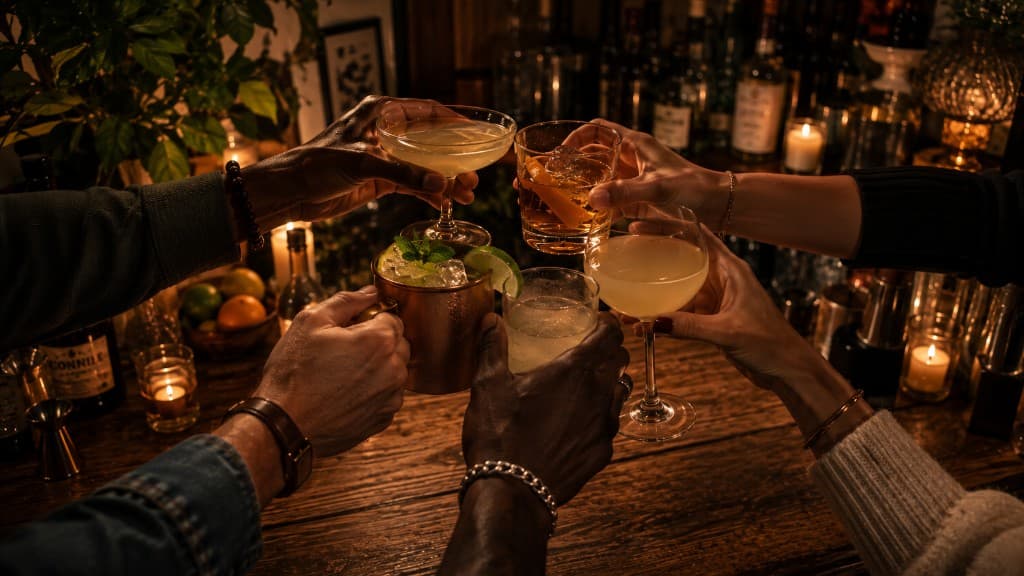
A partner moves in. Friends start gathering every Friday. A family develops holiday traditions around a particular punch bowl and a particular set of recipes. What begins as one person's collection slowly becomes something larger.
The House exists to hold onto that.
Your Profile and your House
The easiest way to think about the distinction is this:
Your Profile is you. Your House is your bar.
A Profile and a House are two different things
Your Profile contains your account information, subscription details, invitations, and House management tools. It's where you manage your relationship to The Bar Book.
The House contains everything else. The cabinet belongs to the House. The recipes belong to the House. The favorites, forks, preparations, and collections all belong to the House. Over time, the House becomes a record of what that bar actually looks like and what the people using it actually drink.
Every Profile has a House attached to it, even if nobody else ever joins.
Houses of one
Most Houses start with a single member, and that's normal.
A House of one has access to the same cabinet, matching engine, recipe tools, and library as every other House. The experience isn't a limited version of The Bar Book waiting for additional members to arrive.
It's the complete experience.
Many people will happily use The Bar Book this way forever. They'll build a cabinet, save recipes, write a few originals, and slowly develop a collection that reflects their own taste.
That's exactly what the House is designed for.
Shared Houses
Some bars belong to more than one person.
A couple might decide they want a shared cabinet and a shared recipe collection. A group of friends might maintain a House together because they regularly drink from the same shelf. A private club or tasting group might build an entire library around a common interest.
In those situations, Members can be invited into the House and contribute alongside everyone else.
The important thing to understand is that sharing is optional.
Not every couple wants a shared House. Some people have completely different tastes and prefer keeping separate collections. One person might spend years building a whiskey-focused library while their partner is collecting bright tropical drinks and alcohol-free recipes. Neither approach is wrong.
The Bar Book supports both.
You can share a House when it makes sense, and keep separate Houses when it doesn't.
The best part is inviting others into your house lets your guests try out new drinks and experiences.
Joining another House
Because every Profile already has its own House, joining another one works a little differently than people often expect.
When you join another House, your own House doesn't disappear. It simply becomes inactive.
Think of it as locking the front door while you're spending time somewhere else.
Your recipes remain there. Your cabinet remains there. Your favorites remain there. Nothing is deleted and nothing is lost.
If you leave the shared House later, your original House is waiting exactly as you left it.
Most people won't think about this very often, but it's one of the reasons the system feels flexible. Sharing a House doesn't require giving up your own.
Owners and Members
Every House has one Owner. The Owner is usually the person who created it. They choose the subscription tier, invite Members, remove Members when necessary, and manage House-level settings through their Profile.
Everyone else is a Member. Members can contribute recipes, update the cabinet, save favorites, create forks, and participate in nearly every part of the experience.
The distinction mostly matters for administration. Once a House is set up, most people stop thinking about roles and start thinking about drinks.
That's generally how it should be.
Invitations & leaving
Inviting someone into a House is straightforward. The Owner generates an invitation from their Profile and sends it to the person they want to invite. The recipient signs in, accepts the invitation, and joins the House.
After that, they're part of the bar. They see the same cabinet, the same recipes, the same favorites, and the same shared history as everyone else.
People leave Houses for all sorts of reasons. Sometimes a couple decides they want separate collections. Sometimes a member simply stops participating. Sometimes a friend group reorganizes itself around a different House.
When that happens, the House keeps its history.
Recipes remain in place. Cabinet entries remain in place. Favorites remain in place. The House continues exactly as it existed before.
The departing Member keeps their Profile and regains access to their own House if they have left a shared one. What changes is access, not history.
A House is more than a collection of accounts. It's a collection of work, and that work stays with the bar where it was created.
The purpose of this chapter
Tiers belong to the House
Subscriptions are attached to Houses rather than individual members.
A couple sharing a bar doesn't buy two copies of the same cocktail book. A tasting group doesn't ask every participant to maintain a separate subscription to the same collection.
The House chooses a tier and everyone inside it benefits from that choice.
Happy Hour
Everything needed to explore The Bar Book, build a small cabinet, save favorite recipes, and begin developing a personal collection. Every recipe in the library and every chapter of the Manuscript remain available. Cabinet space, favorites, and created recipes are capped. API connections unavailable. No invitations.
The Regular
Unlimited cabinet, favorites, and created recipes. Photo uploads. API connections to ChatGPT, Claude, and supported tools. Up to five additional members can be invited. Regular features stay attached to your House — if you join another and later leave, you return to The Regular intact.
It's On The House
One member hosts; up to five additional members join as guests without needing their own subscription. Mirrors how many real bars operate — one person maintains the collection, everyone contributes to and benefits from it. Guests who leave return to Happy Hour on their own Profile.
Open Bar
Expands membership to ten people. All capabilities of It's On The House. Photo limits removed, letting the House document recipes, pours, and memories without worrying about storage. For clubs, tasting groups, large families, friend groups, and communities that have turned a shared interest into a shared body of work.
Some Houses are perfectly happy at Happy Hour. Others grow into The Regular. Shared Houses generally live in It's On The House, while larger groups eventually move into Open Bar.
The tier reflects the needs of the House, not the number of Profiles attached to it.
Looking ahead
Today, Houses are primarily private. They exist so people can build their own collections, maintain their own cabinets, and share those things with the people they actually drink with.
In the future, Houses may gain the ability to publish selected recipes publicly.
If that happens, some Houses will become known for whiskey cocktails. Others will become known for tropical drinks, holiday punches, or alcohol-free recipes. Some will publish constantly. Others will never publish at all.
Either approach is valid.
The interesting thing is that the work has already begun.
Every House is already building a collection. Every House is already making editorial choices. Every House is already deciding which drinks deserve to be remembered.
Publishing would simply make part of that collection visible to the outside world.
The bar remembers
Spend enough time with any bar and patterns begin to emerge.
Certain bottles are always on the shelf. Certain recipes get requested over and over. Some drinks disappear after a month. Others become traditions.
A syrup somebody made on a whim becomes a permanent fixture. A holiday punch gets recreated every December. A riff on a classic slowly replaces the original because everyone likes it better.
Those things accumulate.
That's what a House records.
Not just the ingredients. Not just the recipes.
The habits. The preferences. The traditions. The people who built them.