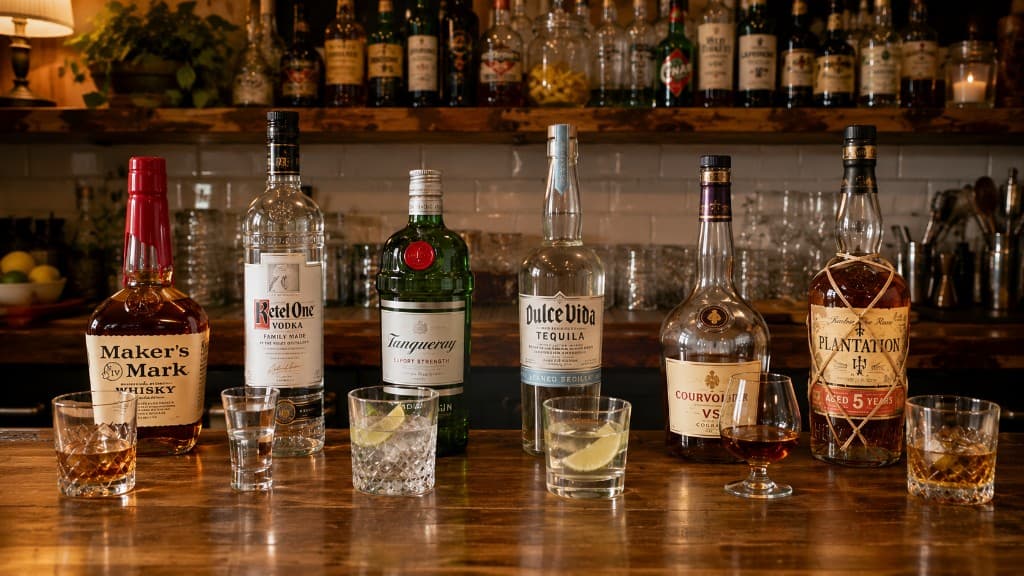
Every cocktail starts with a base spirit. If you don't understand the base, it's difficult to understand the drink built on top of it. What makes bourbon different from rye? Why does a Martini behave differently with gin than vodka? What is mezcal bringing to a recipe that tequila isn't?
Those questions are where spirit knowledge starts.
The Spirits chapter exists to help answer them. But it does something else too.
It provides one of the organizational systems that the rest of The Bar Book relies on.
Categories and subtypes
The Bar Book organizes spirits into categories and subtypes. The distinction matters.
Whiskey is a category. Bourbon, rye, Scotch, Irish, Japanese, and Canadian are subtypes. They're all whiskey, but they don't behave the same way in a cocktail.
There is a reason that certain spirits and subtypes within that category are used in certain recipes and not others. There are certain flavors that are part of each of these, some of which is a combination of ingredients, the process, or how it is finished. All of these things give the spirits their signature profiles.
The subtype tells you how specific the recipe is being. The category tells you which family it belongs to.
Categories and subtypes
- Bourbon
- Rye
- Scotch
- Irish
- Tequila
- Mezcal
- Raicilla
- Cognac
- Armagnac
- Calvados
The same pattern repeats throughout the chapter. Each subtype is a meaningful ingredient. Each category is the larger family that connects them.
Why the taxonomy matters
The taxonomy isn't just reference material.
It's part of how The Bar Book understands ingredients.
When you add a bottle to your cabinet, you're not just recording what you bought. You're telling The Bar Book what that ingredient is. A bottle of Buffalo Trace is bourbon. A bottle of Rittenhouse is rye. A bottle of Del Maguey Vida is mezcal.
The label matters to you. The category and subtype matter to the system. That information helps power recipe matching, recipe filters, cabinet organization, and spirit browsing throughout the app.
The better the classification, the more useful the rest of The Bar Book becomes.
The purpose of this chapter
The six base families
Most cocktails are built on one of six spirit families.
Whiskey
Grain-based and barrel-aged.
Gin
Built around juniper and botanicals.
Rum
Sugarcane-based. The broadest family in style.
Brandy
Distilled from fruit.
Agave
Tequila and mezcal — two distinct character profiles.
Vodka
Intentionally neutral. Lets other ingredients lead.
Those descriptions are intentionally short. The goal of this chapter isn't to teach everything there is to know about spirits. It's to help you navigate the categories and understand how they relate to one another.
If you want to learn more, every category and subtype has its own page.
Two ways to use this chapter
Most people use the Spirits chapter in one of two ways.
The first is as a learning tool. When you want to understand the difference between bourbon and rye, mezcal and tequila, or London Dry and Old Tom gin, start here. Read the category page first. Dive into the subtype pages when you want more detail.
The second is as a browsing tool. Let's say you have a bottle of rye on your shelf and you're not sure what to make with it. Open Whiskey. Open Rye. Browse the drinks built around that subtype.
The Spirits chapter turns a bottle into a list of possibilities.
Most people end up using both approaches over time.
A note on expertise
Real spirits knowledge takes years to build.
There are people who dedicate entire careers to understanding a single category. They can tell you how two distilleries in the same region differ, how production choices affect flavor, or why one bottling behaves differently than another.
The Spirits chapter isn't trying to replace that knowledge. It's trying to give you a useful foundation.
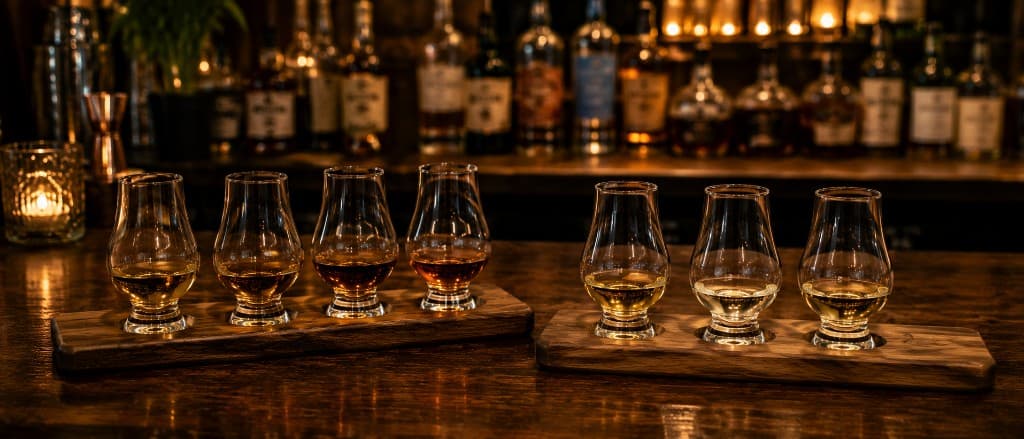
Learn enough to understand what you're buying. Learn enough to understand why a recipe calls for a particular spirit. Let the rest come from experience. Taste the spirits neat. Make cocktails with them. Compare one subtype against another.
The chapter provides the map. The drinking does the teaching.
The Spirits chapter is available without signing in. It's part of the public reference library. If someone wants to understand what bourbon is, or why mezcal tastes different than tequila, you can send them a link and they'll have access to the same reference material you do.