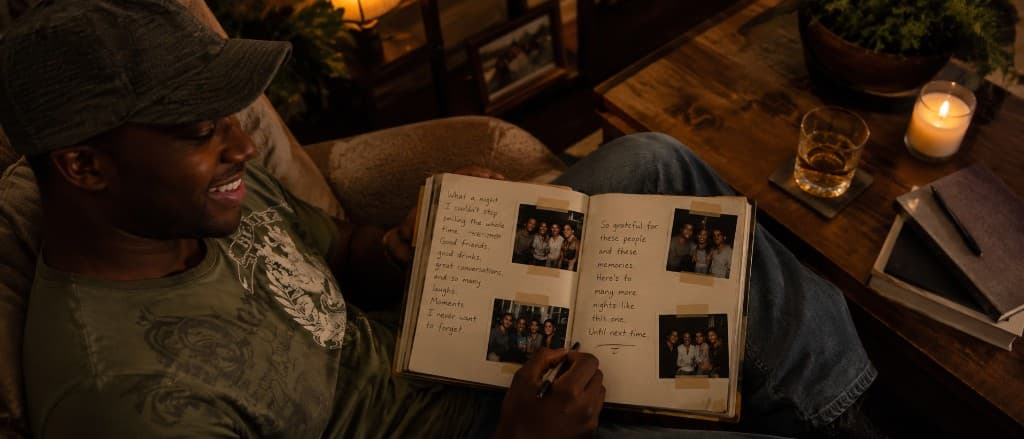
My Book records the drinks. The Journal records the nights.
Every time you press Made This on a recipe, The Bar Book remembers. A small record is created: the recipe, the time, the glass, and the person who made it. Individually, those records aren't very interesting. They're simply pours, little acknowledgements that a drink moved from a recipe on a page into something that actually happened.
The Journal is what happens when those pours are organized into something worth revisiting.
Not a log. Not a report. A scrapbook.
A page for the nights you actually had.
Memory, not measurement
Most features in The Bar Book help you make better drinks. The Spirits chapter teaches categories and subtypes. The Accoutrements chapter helps you build better ingredients. What Can I Make helps you discover possibilities hiding in your cabinet. Even My Book is ultimately a tool for organizing recipes.
The Journal does something different.
It looks backward instead of forward.
Its purpose isn't to help you make the next drink. Its purpose is to help you remember the last one — or more accurately, the evening that surrounded it.
A Manhattan by itself is a recipe. A Manhattan shared with friends on a rainy Saturday becomes a memory. The Journal is interested in the second thing.
The day is the unit
Most activity-tracking applications treat every action as its own event. Do something and a line appears in a feed. Do it again and another line appears beneath it. After enough time, the page becomes a stream of timestamps.
The Journal treats the day as the unit instead.
A quiet Tuesday with a single Old Fashioned becomes one entry. A Saturday gathering with six cocktails and a kitchen full of people also becomes one entry. Both nights receive the same amount of space because both nights are stories.
Evenings have shape. They begin somewhere and end somewhere else. The first drink is rarely the last drink. Someone arrives unexpectedly. A recipe gets modified halfway through the night. The vermouth runs low. A bottle nobody has touched in months suddenly becomes the favorite of the evening. By the time everyone leaves, the bar often looks different than it did when the night began.
The Journal preserves that arc. Rather than scattering a night into individual records, it gathers them back together into a single page.
As a small accommodation to the way people actually drink, the Journal considers the day to end at 5 AM rather than midnight. A nightcap at one in the morning belongs to the evening it came from, not the calendar day that follows.
A pile of prints
Each pour receives a print.
If you took a photograph of the drink, that photograph appears on the print. If no photograph exists, the recipe's image takes its place. If neither exists, the Journal creates a simple nameplate card instead.
The result is a stack of polaroid-style prints representing the evening.
What goes on the polaroid
That metaphor matters because a pile behaves differently than a grid. A grid encourages scanning and comparison. A pile encourages remembering. You flip through it the same way you might flip through old photographs in a box or a stack of prints left on a shelf.
Whether the night contains one drink or fifteen, it remains a single stack and a single story.
Describe, don't count
This principle shaped the entire feature.
Most tracking applications eventually become counting applications. They count days, streaks, frequency, consumption, milestones, and habits. The Journal refuses to do that.
It will never tell you that you've had your fifth Negroni this month. It will never congratulate you on a seven-day streak. It will never encourage you to make another drink because you're approaching a milestone.
Instead, it describes.
The Journal might notice that you've been leaning toward bitter and stirred cocktails lately. It might observe that winter tends to bring whiskey back onto your shelf or that citrus becomes more common when the weather starts to warm. Those observations become part of the telling, but they remain observations.
The distinction matters.
A description invites reflection. A count invites judgment.
The Journal was designed for the first and intentionally avoids the second.
The telling
Beneath the photographs is a sentence or two describing the evening.
A quiet night receives a different kind of telling than a crowded one. A single cocktail after dinner feels different than a table full of friends working through recipes late into the evening, and the Journal adjusts its perspective accordingly.
Some nights stay close to the glass. Others pull back and describe the gathering. The goal isn't to summarize everything that happened. It's simply to capture enough of the shape of the evening that you'll recognize it when you return months later.
The Journal isn't trying to tell your story for you. It's trying to remind you of it.
Written by hand
Every phrase used by the Journal was written by a person.
The Journal assembles those phrases based on the drinks that were made, the season, the time of day, and the shape of the evening, but the words themselves were written in advance. The voice is the same voice found throughout the rest of The Bar Book because the Journal is part of the same publication.
That decision was deliberate.
The voice that explains a Manhattan should be the same voice that remembers the night you made one.
A scrapbook of the nights you actually had — described, never counted, written by hand.
The argument of this chapter
Yours, not the House's
Most of The Bar Book belongs to the House.
The cabinet belongs to the House. My Book belongs to the House. Recipes, favorites, forks, and collections all belong to the House.
The Journal does not.
The Journal belongs to the individual member.
Your pours build your Journal. Other members build their own. The bar may be shared, but the reading of it remains personal.
This isn't because the information is secret. It's because the Journal is the closest thing The Bar Book has to a private notebook. It isn't trying to document everything that happened in the House. It's trying to preserve your experience of it.
A future version of The Bar Book may include a shared House Journal for groups that want one. The default, however, remains personal.
A page from the book
Imagine opening the Journal months from now.
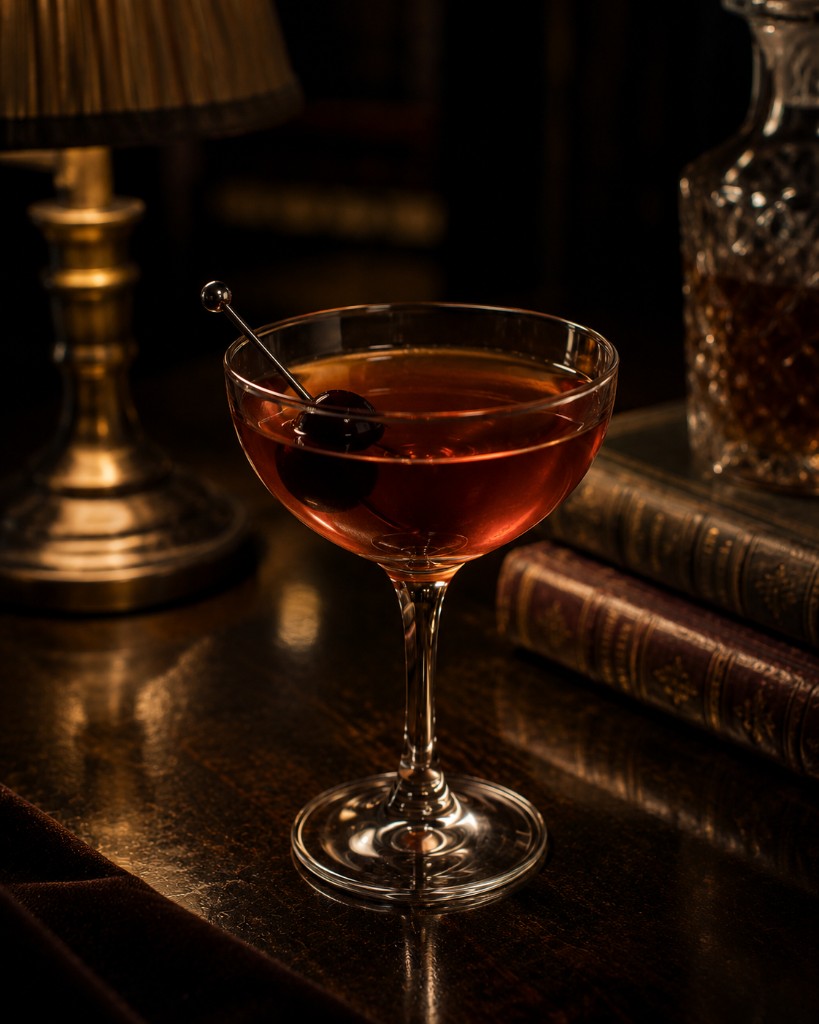
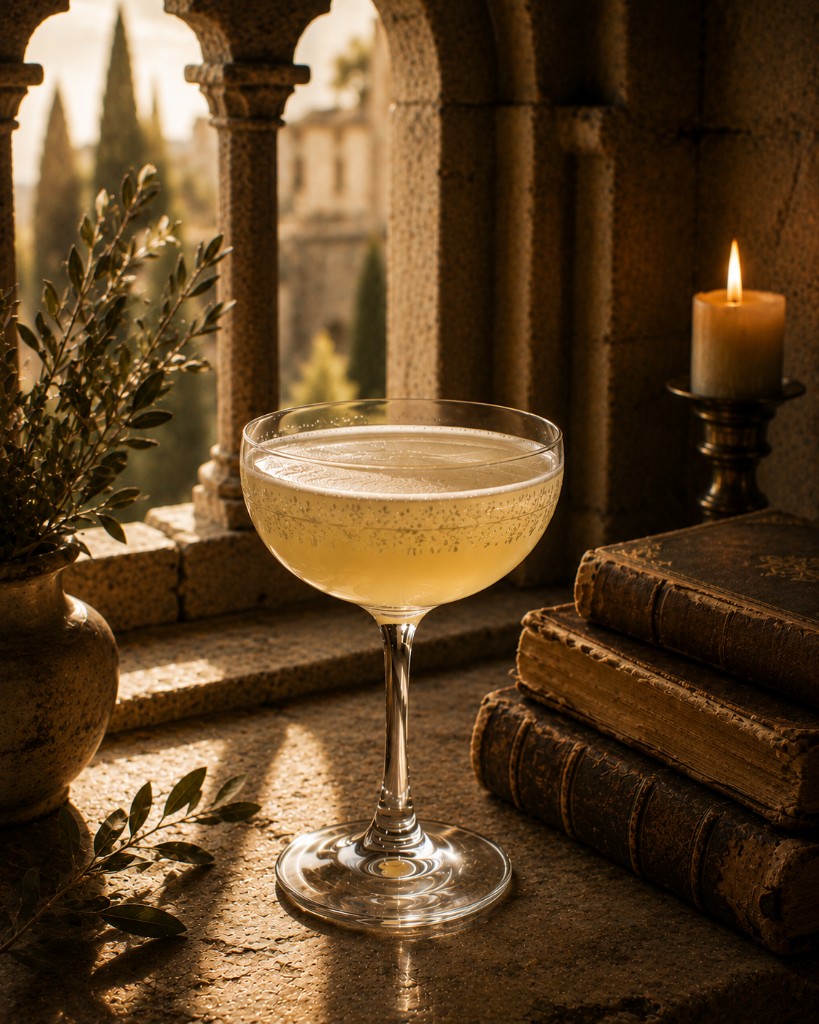
You land on a Saturday in November. There's a stack of prints waiting for you: a Manhattan, an Old Fashioned, a Bergamot Buck, and one of Greg's recipes that everyone ended up making twice. Beneath the stack is a short description of the evening. Maybe there's a handwritten note reminding you that the mezcal experiment worked better than expected.
Four pours · one hand
A spirit-forward Saturday between a full table — bitter and stirred leaning through the evening, with one of Greg's recipes carrying the late hour.


Tap the pile to flip
The mezcal experiment worked better than expected. Greg brought the rye.
You don't need a report. You don't need statistics. You don't need a chart.
You only need enough to remember.
That's what the Journal is trying to preserve.
Not the recipe. Not the ingredients.
The night.
The last chapter of Volume I
My Book records the drinks. The Manuscript teaches the ideas. The Journal records the nights.
Each part of The Bar Book serves a different purpose. One helps you learn. One helps you organize. One helps you remember. That's why the Journal closes Volume I.
The earlier chapters explain how the system works. The Journal explains what happens after you've spent enough time using it. The shelf fills up. The recipes accumulate. Traditions begin to form. Eventually the book starts telling your story back to you.